
The Liquidity Moment: Why Space Investing Is Entering Its Prime
Space investing has reached a pivotal moment: the infrastructure layer is built, applications are scaling, and liquidity is beginning to emerge. Speculation around a potential SpaceX IPO is more than a headline — it could become a defining reference point for how global capital prices the space economy, validating that the sector is no longer proof-of-concept, but proof-of-market. For investors, this is the kind of inflection point that reshapes an asset class. At S4E Capital, we’re investing into space-enabled technologies that turn orbital capability into real-world solutions across sustainable food production, water monitoring, decarbonisation, and ending deforestation — alongside defence and dual-use capabilities that strengthen national resilience.
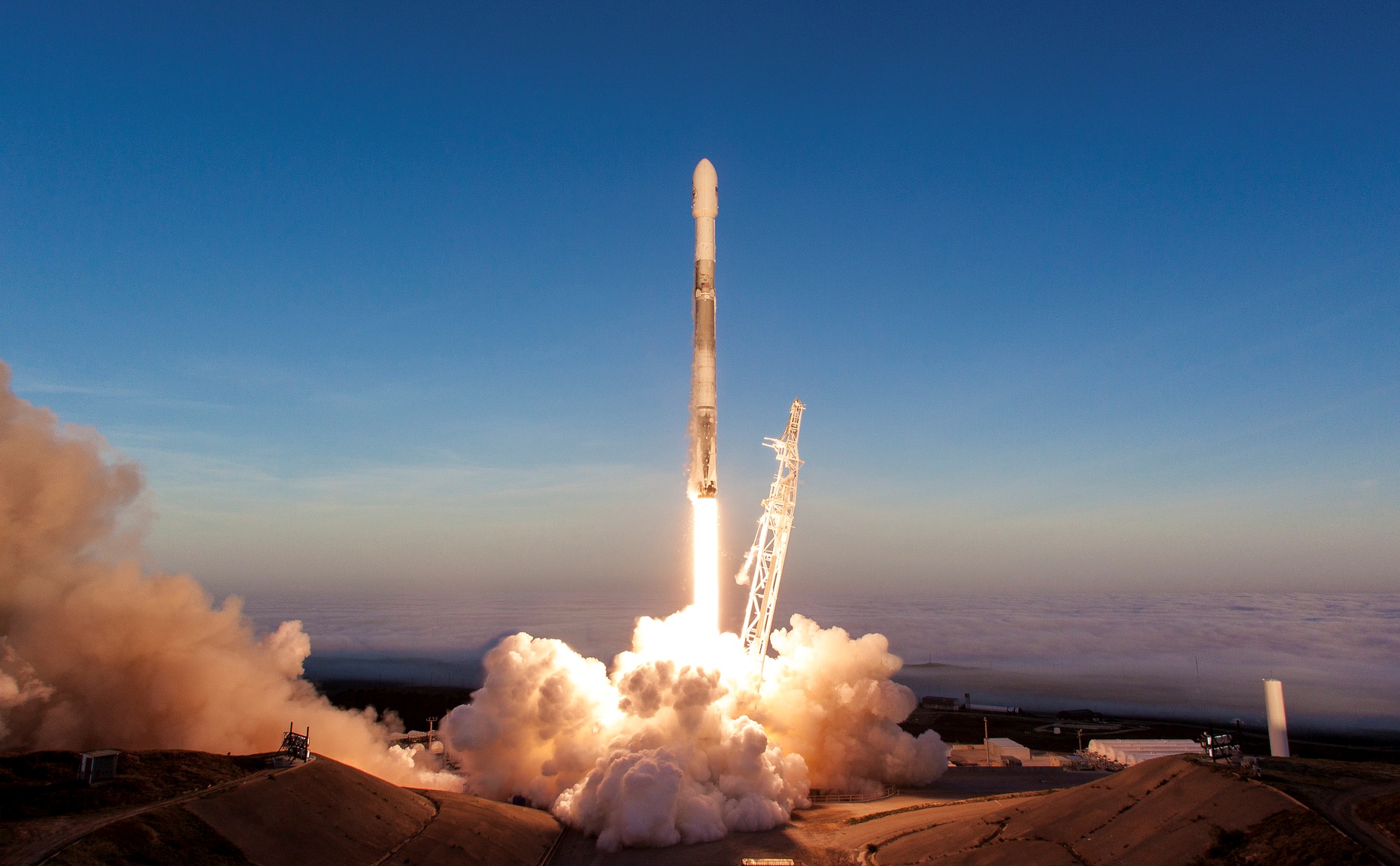
The Liquidity Moment: Why Space Investing Is Entering Its Prime
Space investing has spent the last decade in an unusual position: commercially proven, strategically essential, and yet structurally illiquid. Investors have been willing to fund the infrastructure layer of the space economy — launch, connectivity, Earth observation, geospatial intelligence — but the sector has remained largely private, with limited public benchmarks and a small number of credible exit routes.
That is why speculation around a potential SpaceX IPO is more than a headline. If it materialises, it could represent the first true public-market inflection point for the modern space economy — the moment when space transitions from a frontier allocation into a mainstream institutional category.
SpaceX is no longer just a launch company. Starlink has introduced a scaled, recurring revenue engine that makes the broader SpaceX platform increasingly infrastructure-grade. That distinction matters in public markets: predictable cashflows, strategic relevance, and global demand are precisely what opens the door to institutional participation.
If SpaceX goes public it would likely become a landmark listing, not unlike what Saudi Aramco represented for energy, or what Nvidia has come to represent for AI infrastructure. In other words, it wouldn’t merely be an IPO; it would be a reference point for how global capital prices the space economy. It would also sharpen valuation discipline across the private market by creating a clear public benchmark. Most importantly, it would validate what the best space investors already understand: the sector is no longer proof-of-concept, it is proof-of-market.
Why This Matters Now
Liquidity changes behaviour — and it changes the gravitational pull of capital.
A credible public exit pathway attracts allocators who previously sat on the sidelines. It increases the availability of later-stage capital. It drives M&A activity. It compresses the cost of capital for high-quality businesses. It also enables venture and growth investors to recycle proceeds into the next generation of companies — the mechanism that has accelerated ecosystems like software and fintech for decades.
Space is now approaching that same moment.
Whether SpaceX lists this year or later is ultimately less important than the direction of travel: the market is maturing. The infrastructure layer is built. Applications are scaling. And capital markets are beginning to catch up with the sector’s strategic role in sustainability, security, communications, and resilience.
The Investment Window Is Open
This is precisely why now is an attractive time to be investing in space — not at peak euphoria, but at the inflection point where the foundations have been laid and liquidity is beginning to emerge.
From our perspective at S4E Capital, this shift is not a theory — it is the basis of the opportunity. We invest in space-enabled technologies that turn orbital infrastructure into real-world solutions across sustainable food production, water monitoring, decarbonisation, and ending deforestation — alongside defence and dual-use capabilities that strengthen national resilience.
A SpaceX IPO, should it occur, would not only provide validation — it would bring visibility, liquidity, and long-duration institutional attention to the sector. And when that happens, the investors who entered early, at the point of structural transition, will have positioned themselves on the right side of the cycle.
LikeDiscussion
Share
Discussion
You are commenting on The Liquidity Moment: Why Space Investing Is Entering Its Prime
You must be logged in to add a comment
There are no comments
Be the first to add to the discussion
Fund manager

Space4Earth
Luxembourg City, LuxembourgSpace4Earth (S4E Capital) is a visionary investment fund dedicated to accelerating the transformation of space technologies into real-world solutions. We believe the future of earth is being shaped in orbit — and we exist to ensure that the most promising innovations in space reach the ground with purpose, precision, and impact. S4E Capital is a specialist venture capital firm investing in satellite-enabled, dual-use (defence and commercial) technologies that address global sustainability challenges. The fund is led by a team with deep expertise across space technology, sustainability, and institutional capital markets — combining technical and industry insight with disciplined investment experience. Citicourt & Co is a London based regulated corporate finance firm specialising in, amongst other sectors, space and aerospace, and is the regulated advisor to the Fund.
private equityvc
Related news

VenCap Weekly Update - 12 December 2025

Why Infrastructure Is a Compelling Investment for All Cycles
Big trends are driving long-term investment opportunities in high-quality essential assets.

Brookfield’s 2026 Investment Outlook: A Defining Moment for Global Markets

Bridgepoint to Reinvest in Kyriba, Alongside New Minority Investor, General Atlantic

With More Companies Privately Owned, Capital and Operational Excellence will Define Private Equity Success


NVIDIA Partners with Apollo, BlackRock, Blackstone, Brookfield, Goldman Sachs and KKR to Establish AI Compute Infrastructure Financing Platforms to Mobilize Over $500 Billion of Third-Party Capital

Square Nine Capital Named a 2025 Private Credit Emerging Manager to Watch